
Building Better Small Business Systems: A Practical Guide
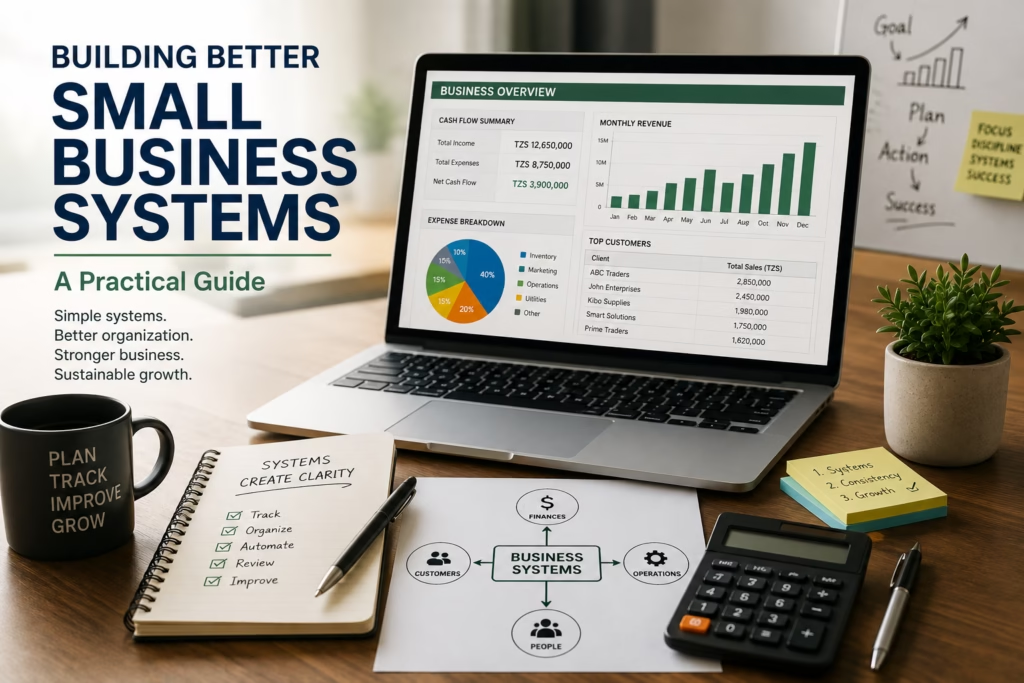
Many small businesses do not struggle because of lack of effort, ambition, or good ideas. In many cases, they struggle because operations become difficult to manage as the business grows.
Customers are forgotten. Follow-ups become inconsistent. Financial records become unclear. Important information is stored in different places. Responsibilities become confusing. Over time, these small operational issues begin affecting growth, decision-making, and overall business stability.
This is where systems become important.
When people hear the word “systems,” they often imagine expensive software, complicated technology, or large corporate structures. In reality, a business system can simply be an organized way of doing things consistently.
A system helps a business operate more clearly, more reliably, and more efficiently.
Even small improvements in organization can create meaningful long-term results.
Why Systems Matter in Small Businesses
In the early stages of a business, many operations depend heavily on the owner remembering everything personally. This may work for a short period of time, but as activities increase, it becomes harder to manage customers, finances, communication, inventory, reporting, and daily operations without structure.
Eventually, the business begins reacting to problems instead of operating proactively.
Strong systems help reduce this pressure by creating consistency and visibility in how work is managed.
Good systems can help businesses:
- Stay organized
- Improve communication
- Track important information
- Strengthen customer relationships
- Support better financial management
- Reduce operational confusion
- Save time
- Improve accountability
- Prepare for growth
Most importantly, systems help businesses become more dependable and sustainable over time.
Systems Do Not Need to Be Complicated
One of the biggest misconceptions about business systems is that they must be expensive or highly technical.
In reality, many small businesses can improve significantly using simple tools such as:
- Google Sheets
- Excel spreadsheets
- Shared documents
- Calendars
- Organized folders
- Weekly checklists
- Follow-up routines
- Basic reporting structures
The goal is not complexity.
The goal is consistency.
A simple system that is used consistently is often more valuable than an advanced system that nobody maintains properly.
1. Customer Follow-Up System
Many businesses lose opportunities simply because customer communication is not tracked properly.
A customer may inquire today, but without follow-up, the opportunity can easily be forgotten after a few days.
A simple customer tracking sheet can help businesses stay organized and responsive.
Example of a Basic Customer Follow-Up Tracker
| Customer Name | Phone Number | Last Contact Date | Next Follow-Up Date | Status | Notes |
| John Traders | 07XXXXXXXX | 12 May | 18 May | Pending | Requested quotation |
This type of simple tracking system can help businesses:
- Maintain customer relationships
- Improve responsiveness
- Reduce missed opportunities
- Track communication history
- Stay consistent with follow-ups
Many businesses do not need sophisticated CRM software at the beginning. Even a basic spreadsheet can create major operational improvement.
2. Financial Tracking System
Financial confusion is one of the most common challenges in small businesses.
Some businesses do not clearly track:
- sales,
- expenses,
- cash balances,
- debts,
- or profitability.
In some cases, personal and business money are mixed together, making it difficult to understand the true financial position of the business.
A simple financial tracking system can improve visibility and support better decision-making.
Example of a Simple Cash Flow Tracker
| Date | Money In | Money Out | Purpose | Balance |
| 10 May | 500,000 | 100,000 | Inventory Purchase | 400,000 |
Even simple daily tracking can help business owners:
- understand spending patterns,
- improve budgeting,
- monitor cash flow,
- and prepare better financial reports.
Good financial organization also increases credibility when dealing with investors, lenders, partners, or stakeholders.
3. Task & Operations Tracking System
As businesses grow, relying only on memory becomes risky.
Tasks may be forgotten. Deadlines may be missed. Team coordination may become inconsistent.
A simple task tracking system can improve accountability and operational clarity.
Example of a Weekly Task Tracker
| Task | Responsible Person | Deadline | Status |
| Prepare monthly sales report | Sarah | Friday | In Progress |
This type of structure helps businesses:
- monitor responsibilities,
- improve coordination,
- track progress,
- and reduce confusion.
Simple operational discipline can significantly improve daily business efficiency.
4. Inventory Management System
For businesses dealing with products, inventory management is extremely important.
Without proper tracking:
- products may run out unexpectedly,
- overstocking may occur,
- losses may increase,
- and customer trust may be affected.
A simple inventory sheet can help businesses monitor stock movement more effectively.
Example of a Basic Inventory Tracker
| Product | Quantity Available | Minimum Level | Supplier |
| Cooking Oil | 15 | 5 | ABC Supplies |
This helps business owners identify:
- when restocking is needed,
- which products move faster,
- and where operational adjustments may be necessary.
5. Reporting & Review Habits
One of the simplest but most powerful systems a business can develop is regular review.
Many businesses operate continuously without stopping to evaluate:
- performance,
- challenges,
- finances,
- customer trends,
- or operational progress.
Weekly or monthly reviews can help businesses identify problems early and make better decisions.
Simple questions can already create valuable insight:
- What went well this week?
- What challenges emerged?
- Which customers require follow-up?
- Which expenses increased?
- Which opportunities should receive more attention?
Regular review creates awareness, and awareness improves decision-making.
Systems Help Businesses Grow Sustainably
Growth without systems often creates stress and operational instability.
As customer numbers increase and responsibilities expand, businesses that lack structure may struggle to maintain quality, communication, and organization.
Strong systems help businesses scale more sustainably because operations become less dependent on memory and more supported by process.
This does not mean businesses must become overly rigid or bureaucratic.
It simply means creating organized ways to manage important activities consistently.
Systems Also Build Investor Confidence
From an investment perspective, organized businesses are generally easier to understand, evaluate, and support.
Investors and financial partners often look beyond the business idea itself. They also consider:
- operational discipline,
- financial organization,
- reporting structure,
- communication quality,
- and management reliability.
A business with clear systems often demonstrates stronger readiness for growth and long-term sustainability.
Even simple operational structure can significantly improve credibility.
Start Small and Improve Gradually
One important thing for small business owners to remember is that systems do not need to be perfect from the beginning.
The best approach is often to:
- start simple,
- stay consistent,
- and improve gradually over time.
A basic spreadsheet used properly every week can already create meaningful improvement.
The goal is progress, not perfection.
Over time, small operational improvements compound into stronger business performance.
Final Thoughts
Building a strong business is not only about working harder. It is also about creating systems that make operations more organized, more reliable, and more sustainable.
Simple systems can help businesses improve communication, strengthen financial management, support better decision-making, and reduce unnecessary operational pressure.
In many cases, long-term business growth is not driven only by ambition or capital, but by the ability to create structure, consistency, and operational discipline over time.
Strong businesses are rarely built by effort alone.
They are built by systems that support sustainable growth.